
In early 2026, McKinsey quietly changed its hiring criteria.
Where computer science and data science graduates once had a clear advantage, the consulting giant started actively recruiting philosophy, history, and literature majors. (Fortune, 2026) Around the same time, something equally telling happened in Silicon Valley: tech-industry parents began pulling their children out of coding camps — and enrolling them in philosophy courses.
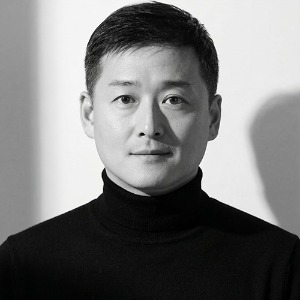
This isn't a passing trend. It's a structural shift, and Korean HR professor Hwang Seonghyeon (formerly Google HR and Kakao's Chief People Officer, now at Gachon University) offers a sharp explanation:
"AI now handles the 'How.' What's left for humans is the 'What' and the 'Why.'"
As someone who has spent nearly two decades in HR at a Korean manufacturing company, I've watched this transformation unfold in real time — and the implications for everyday workers are bigger than most people realize.
The Liberal Arts Revival: Why Now?

Just two years ago, the career advice in Silicon Valley was simple: learn to code. Parents debated which bootcamp would give their children the best edge. But a fundamental question has changed. It's no longer "Can my child write code?" — it's "Can my child decide what should be built and why?"
Professor Hwang points to a clear logic behind this shift. When AI can write code, analyze data, and even generate designs, the human role moves upstream — to problem definition. And problem definition requires the kind of thinking that liberal arts education cultivates: critical analysis, ethical reasoning, and the ability to ask the right questions.
The numbers back this up. PwC's 2025 Global AI Jobs Barometer shows that formal degree requirements are declining across AI-related roles. McKinsey's CEO has predicted that "within 18 months, every employee will collaborate with at least one AI agent." (Fortune, 2026)
When AI handles execution, humans must handle direction. And direction requires context-reading ability — a fundamentally humanistic skill.
Here's what this looks like in practice. When I recently built a workflow automation tool using Claude Code, the AI handled the coding flawlessly. But the hardest part — and the part that determined whether the tool actually solved the problem — was defining exactly what the problem was. The quality of my question shaped the quality of the AI's output entirely.
From Adjectives to Verbs: Rethinking Performance Evaluation

Every evaluation season in Korean companies follows a familiar pattern. Managers write phrases like "diligent," "good team player," and "needs improvement." Employees read these assessments — and have no idea what to actually change.
Professor Hwang calls this the adjective trap. His proposed solution is disarmingly simple: switch to verbs.
He uses a baseball coaching analogy. Telling a batter "your swing looks good" (adjective) changes nothing. Telling them "lower your swing angle by 15 degrees" (verb + number) creates real improvement.
This shift becomes even more critical in the AI era. To give effective instructions to an AI agent, you need specificity. "Write a good report" produces mediocre results. "Extract all items with year-over-year revenue decline exceeding 10% from Q1 data and analyze three root causes" produces actionable output.
The language of human feedback and AI instruction is converging — toward verbs and numbers.
| Type | Adjective-Based (Old) | Verb-Based (New) |
| Positive feedback | "Responsible and diligent" | "Shared draft 3 days before deadline and incorporated team input" |
| Improvement feedback | "Poor communication" | "Summarize progress in under 2 minutes at weekly meetings" |
| AI instruction | "Make a good report" | "Extract items with >10% YoY decline from March data" |
A 2025 survey of 206 Korean HRD professionals confirms this trend. While AI proficiency ranked first (69.9%) among skills to strengthen in 2026, communication (58.6%) and problem-solving (37.6%) followed closely. (HRD Article, 2025) Knowing how to use AI is table stakes. Knowing how to speak to AI — and to people — in precise, actionable language is the differentiator.
Middle Managers in the AI Agent Era: Most at Risk?

At the HR EXChange 2026 conference, Professor Hwang presented a projection that should make every middle manager pay attention:
Human-to-AI work ratio: Currently 9:1 → Within 3 years, 5:5 → Eventually, 1:9.
Today, humans handle 90% of work while AI assists with 10%. But as AI agents mature, this ratio inverts. Machines will process 90%; humans will handle 10%. The critical question becomes: what does that 10% consist of?
According to Professor Hwang, it's setting direction and assigning meaning.
He frames AI development in five stages:
| Stage | Name | Description |
| 1 | Chatbots | Answering questions (where most organizations are today) |
| 2 | Reasoners | Solving complex problems step by step |
| 3 | Agents | Making autonomous decisions and taking action (entering now) |
| 4 | Innovators | Creating genuinely new solutions |
| 5 | Organizations | AI operating as organizational units |
At Stage 3, organizational structures change fundamentally. When an AI agent reporting directly to the CEO can process the workload of hundreds of employees, the information-relay function of middle management structurally disappears.
Gloat's 2026 report confirms this reality: 40% of roles at Global 2000 companies already require collaboration with AI agents, and AI agent-related job postings surged 986% in a single year.
But here's the nuance that matters: management isn't disappearing — it's transforming. McKinsey Global Institute found that people management skills are now the fastest-growing skill demand, newly required across 138 job categories. (McKinsey MGI, 2025)
The manager who relays information will be replaced. The manager who designs human-AI collaboration will thrive.
Three Things Every Worker Should Prepare Now

Distilling Professor Hwang's insights into practical advice for working professionals, three priorities emerge:
1. Practice defining problems before solving them.
Before telling AI "do this," spend five minutes asking yourself: "What is the actual problem I'm trying to solve?" When I use Claude Code, I've learned that a precisely defined problem produces dramatically better results than a vague request. The quality of your question determines the quality of AI's answer.
2. Replace adjectives with verbs in your daily language.
When giving feedback to a colleague, try replacing "good job" with "the trend line you added on page 3 made the quarterly comparison much clearer." When instructing AI, replace "make it better" with specific action verbs and measurable criteria. This habit compounds — in both human and AI interactions.
3. Become a context provider.
Professor Hwang defines the future human role as "context provider." AI processes data, but humans assign meaning to that data. "Why does this number matter?" "Who needs to see this, and in what order?" — the ability to read context and provide it to both AI and colleagues is the emerging core competency.
A survey by the Korea Chamber of Commerce found that while 69.2% of Korean companies now consider AI skills in hiring, communication and collaboration (55.4%) and domain expertise (54.9%) rank immediately after. (KCCI, 2025) AI literacy is becoming baseline; the ability to understand people and read context is becoming the differentiator.
Frequently Asked Questions
Final Thoughts
One sentence from Professor Hwang has stayed with me:
"Technical implementation is moving to AI's domain. What remains for humans is the capacity for thought — deciding what to create."
You don't need to master coding. You don't need to memorize Excel formulas. AI will handle those things. But asking "Why does this report matter?" and "Who does this project serve?" — that's still a human job.
Tomorrow, before you ask AI to do something, try one thing: pause and ask yourself, "What exactly is the problem I'm solving?" That single question can transform the output you get.
Tools are getting smarter every day. May the questions we ask grow a little deeper, too.
References
- Professor Hwang Seonghyeon Interview, T Times TV (2026.03.01)
- Professor Hwang Seonghyeon Presentation, HR EXChange 2026 Track C (MoneyToday, 2026.03.04)
- Fortune, "McKinsey shifts hiring toward liberal arts majors", 2026.01.14
- PwC, "2025 Global AI Jobs Barometer"
- McKinsey Global Institute, "Agents, robots, and us: Skill partnerships in the age of AI", 2025
- Gloat, "AI Workforce Trends 2026" (gloat.com)
- Korea Chamber of Commerce and Industry (KCCI), "2025 H2 Corporate Hiring Trends Survey"
- HRD Article, "2025 HRD Status and 2026 Strategy Report"
- Korea Productivity Center (KPC), "2026 HRD Trend Report"


