

| 일 | 월 | 화 | 수 | 목 | 금 | 토 |
|---|---|---|---|---|---|---|
| 1 | 2 | |||||
| 3 | 4 | 5 | 6 | 7 | 8 | 9 |
| 10 | 11 | 12 | 13 | 14 | 15 | 16 |
| 17 | 18 | 19 | 20 | 21 | 22 | 23 |
| 24 | 25 | 26 | 27 | 28 | 29 | 30 |
| 31 |
- ChatGPT
- AI workplace
- HRTECH
- FutureofWork
- 직장인ai
- promptengineering
- notebooklm
- 업무자동화
- CreativeThinking
- AISkills
- vibecoding
- aiproductivity
- claudeai
- WorkplaceWellness
- 직장인ai활용
- CitizenDeveloper
- GenerativeAI
- AICreativity
- 클로드코드
- WorkplaceAutomation
- Anthropic
- chatGPT활용법
- workplaceAI
- productivity
- HRAutomation
- AIAdoption
- claudecode
- ai에이전트
- 엑셀VBA자동화
- NonDeveloperCoding
- Today
- Total
GoodTechAI
LLM, RAG, AI Agent — 12 AI Buzzwords Explained With One Car Analogy 본문
LLM, RAG, AI Agent — 12 AI Buzzwords Explained With One Car Analogy
GoodTechAdviser 2026. 3. 20. 08:30GoodTech A. 6 min read

Table of Contents
8 min read | AI Basics
The Problem: Too Many AI Terms
Every week brings a new AI buzzword. LLM, RAG, MCP, Agent, Multi-Agent, Orchestrator — if you've lost track of what's what, you're not alone.
As a Korean HR professional who runs AI training sessions for manufacturing workers, I hear the same question every single time: "What's the difference between a chatbot and an AI agent?" People who've already used ChatGPT for drafts and uploaded documents to NotebookLM still struggle to see where one concept ends and another begins.
Here's the mental model that finally made it click for me: a car. Map all 12 AI concepts onto a single car, and suddenly the entire landscape makes sense. The engine, the GPS, the USB port, the wrench in the trunk — and self-driving mode. Let's take the tour.

Parts Without Autonomy — Engine, Vending Machine, Wrench, Manual
These four are essential, but none of them decide where to go on their own.
LLM = Engine 🧠
Claude, GPT, Gemini — different names, same category. A Large Language Model is the engine that powers AI: it understands and generates text. But an engine alone doesn't take you anywhere. Someone has to sit behind the wheel.
Real-world parallel: You ask ChatGPT to write a report. It delivers one response and stops. It doesn't decide what to do next.
Chatbot = Vending Machine 🎰
Insert a coin (question), get a drink (answer). That's it. A customer service chatbot tells you "Our hours are 9 AM to 6 PM" and forgets the conversation ever happened. No memory, no next step, no autonomy.
Tool = Wrench & Screwdriver 🔧
Web search, calculator, file creator — these are utilities sitting in a toolbox. The critical point: tools have zero judgment. They only work when someone says "use this tool now." Think of an Excel macro: press the button, it repeats the same action. No situation awareness.
Skill = Operations Manual 📖
Picture the SOP binder you hand a new hire: "When this request comes in, follow these steps." AI skills work the same way — pre-written recipes that the AI follows to the letter. The human designs 100% of the workflow. The AI has zero discretion.
Infrastructure — USB Port, GPS, Trunk
With the engine and tools in place, you need connections, navigation, and storage.
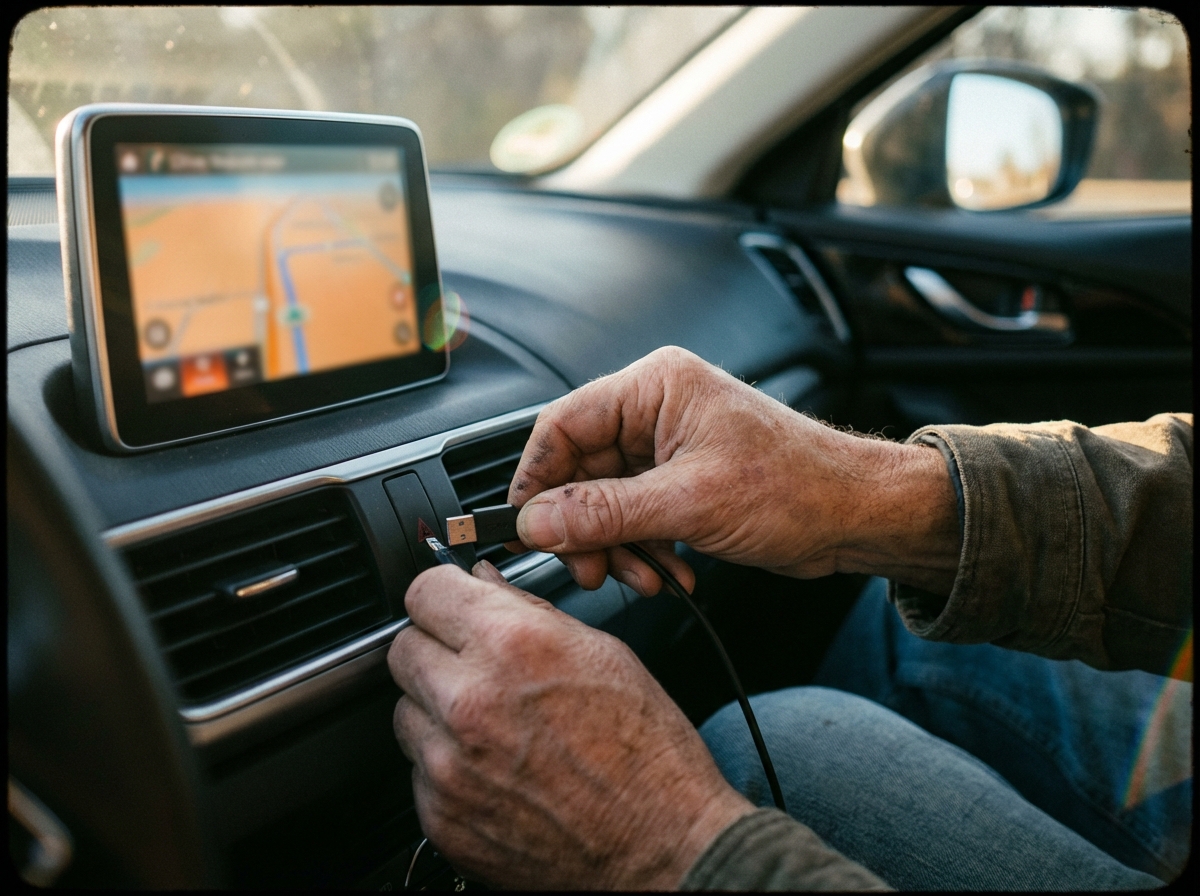
MCP = USB Port 🔌
Remember when every device needed its own cable? USB unified that chaos. MCP (Model Context Protocol) does the same for AI. Released by Anthropic as an open standard in November 2024, MCP lets you plug Notion, Gmail, Slack, and Google Drive into your AI through a single standardized interface.
Before MCP, connecting each service required custom API development. MCP is the universal port — not an agent itself, but the gateway agents use to reach the outside world.
RAG = GPS + Open-Book Exam 🗺️
Imagine taking a test where you're allowed to check your notes. That's RAG (Retrieval-Augmented Generation). An LLM on its own only knows what it learned during training. Attach RAG, and it can consult your company documents, latest news, or internal policies before answering — just like a GPS checking real-time traffic before suggesting a route.
I uploaded 10 internal training documents to NotebookLM, and it answered questions strictly from those sources. No hallucination, no tangents. That's the power of RAG.
Artifact = Finished Dish 📦
If the agent is the chef, the artifact is the meal it serves. Reports, code files, images, audio podcasts — any output AI produces is an artifact. It doesn't think or act on its own.
Project = Driver Profile 📝
Save your driver profile and the car remembers your seat height, mirror angles, and frequent destinations. An AI project stores your context: "I work in HR at a manufacturing company and handle performance evaluations." No need to repeat yourself every conversation.
NotebookLM = Source-Based GPS 📚
Google's document-grounded RAG tool. Upload files and it answers only from those sources. The podcast feature got famous, but the core value is "an AI that stays within your uploaded materials."

Self-Driving Mode — The Real Agents
Here's where things change. Everything above is a part or infrastructure. An agent is the system that combines those parts autonomously to reach a goal.
Agent = Self-Driving Car 🚙
Just tell it the destination. It plans the route, drives, and reroutes when the road is blocked. You sit in the back seat.
That's exactly what an AI agent does. Say "Create a competitive analysis report" and it searches, organizes, drafts, reviews, and revises — all on its own. Experts are calling 2026 the "Year of the AI Agent." According to Fortune Business Insights, the AI agent market grew from $7.29 billion in 2025 to an estimated $9.14 billion in 2026.
Multi-Agent = Vehicle Convoy 🚚
Think of moving day. The truck carries furniture, the sedan hauls boxes, and the motorcycle scouts parking ahead. Divide roles, and the team handles complexity no single vehicle could.
Multi-agent systems work the same way: a research agent investigates, a writing agent drafts, and a design agent visualizes. In fact, this very blog post was created with a research agent gathering data while I wrote the final piece.
Orchestrator = Traffic Control Center 📡
When multiple vehicles share the road, someone coordinates the flow. "Research agent, investigate first. When you're done, hand off to the design agent." The orchestrator is the senior agent that sequences tasks and merges results.

The 4-Question Agent Test
Not sure if something qualifies as an agent? Ask these four questions. All four must be YES.
| Criterion | Question | Car Analogy |
| Autonomy | Does it decide what to do next on its own? | Self-driving lane changes |
| Goal-Oriented | Does it keep going until the goal is met? | Drives until destination reached |
| Self-Retry | Does it change approach when it fails? | Finds detour when road is blocked |
| Tool Use | Does it choose and use external tools? | Operates GPS, AC, dashcam as needed |
Here's the paradox worth remembering: the more autonomous the AI, the harder it is to control the exact output. Self-driving is convenient, but sometimes it won't take your favorite shortcut. When you need precision, a skill (manual) may actually outperform an agent. Choosing the right level of autonomy for the task — that's the real skill.
All 12 Concepts at a Glance
| Concept | Car Analogy | One-Line Description | Agent? |
| LLM | Engine | AI's brain — understands and generates language | ✗ Part |
| Chatbot | Vending Machine | One-shot Q&A machine | ✗ One response |
| Tool | Wrench & Screwdriver | Executes only when told | ✗ No autonomy |
| Skill | Operations Manual | Human-designed workflow (SOP) | ✗ No autonomy |
| MCP | USB Port | Standardized external service connector | ✗ Gateway |
| RAG | GPS + Open-Book | Searches your data before answering | ✗ Search aid |
| Artifact | Finished Dish | AI-generated output | ✗ Output |
| Project | Driver Profile | Long-term memory for AI | ✗ Context store |
| NotebookLM | Source-Based GPS | Document-grounded RAG tool | ✗ Converter |
| Agent | Self-Driving Car | Plans, executes, retries autonomously | ✓ |
| Multi-Agent | Vehicle Convoy | Team of agents with divided roles | ✓ |
| Orchestrator | Traffic Control Center | Senior agent coordinating the team | ✓ |
Frequently Asked Questions
You don't need to memorize the spec sheet of every car part to be a good driver. But knowing what's under the hood — and what each button on the dashboard does — means you'll get where you're going faster, safer, and with far less frustration.
These 12 concepts are your AI road map. You don't have to use every part today. Just know they exist, and reach for them when the road calls for it.
References
- Changhoon Jeong (Instructor), "AI Concept Overview" training material (EAGON employee AI education)
- Fortune Business Insights, "Agentic AI Market", 2026
- Anthropic, "Model Context Protocol (MCP)" official release, Nov 2024
- Google Cloud, "What is Model Context Protocol (MCP)?", 2025
- Deloitte Insights, "Agentic AI Strategy — Tech Trends 2026"
- The Conversation, "AI agents arrived in 2025", Dec 2025


